

As an affiliate, we may earn a commission from qualifying purchases. We get commissions for purchases made through links on this website from Amazon and other third parties.
A good crib mattress protector blocks leaks without leaving a loose, noisy layer under the fitted sheet. Naturepedic focuses on organic cotton and a thin waterproof membrane, while Sealy offers a cotton-polyester quilted pad that is easy to wash and dry. Both are designed for standard crib and crib-size toddler mattresses.
Best Organic Cotton Pick
Best Easy-Care Pick
Our Crib Mattress Protector Picks
1 / 2
Naturepedic Organic Waterproof Crib Mattress Pad
Size
About 27.25 x 51.625 inches
Depth
Fits mattresses about 6 inches deep
Surface
GOTS-certified organic cotton
Barrier
Thin waterproof membrane
Care
Machine washable and dryable
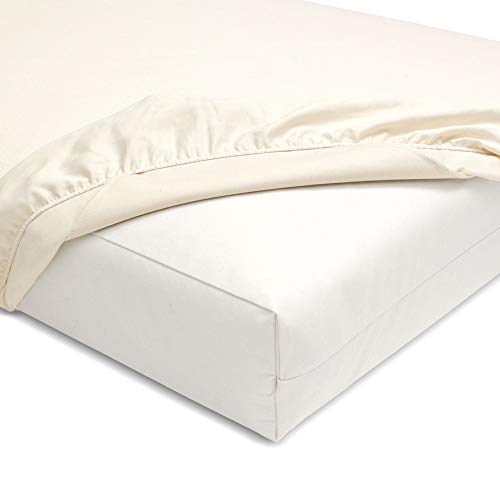
Naturepedic places a thin waterproof membrane between organic cotton top and bottom layers. The fitted pad is sized around a standard crib mattress measuring about 27 1/4 by 51 5/8 inches and 6 inches deep. It blocks routine leaks while staying quiet and smooth beneath a fitted sheet.
The dense cotton construction takes longer to dry than a lighter synthetic pad. Plan for a low-heat cycle and enough time for every layer to dry before reuse. Its fitted edge stays snug on the intended mattress, but dimensions still matter; the crib protector fit guide explains how to check for shifting or raised corners.
Why It Works
- Organic cotton covers both sides of the waterproof membrane.
- The thin barrier keeps the pad quiet under a fitted sheet.
- Repeat washing does not quickly distort the fitted shape.
What To Keep In Mind
- The thicker cotton layers can take a long time to dry.
- The selected fitted size is intended for a standard crib mattress.
- Certification applies to stated materials and testing scope, not every possible product claim.
2 / 2
Sealy Baby Crib Mattress Protector

Size
52 x 28 inches
Surface
Quilted cotton-polyester blend
Barrier
Waterproof backing
Fit
Elasticized fitted skirt
Care
Machine washable and dryer safe
Sealy's fitted protector uses a quilted cotton-polyester top over a waterproof backing. It fits a standard 52-by-28-inch crib mattress and has elasticized edges that pull beneath the mattress. The white surface also avoids a print showing through a light fitted sheet.
This pad holds up well through frequent washer and dryer cycles and continues blocking potty-training leaks. Noise is not identical in every setup: most installations remain quiet, while one found the barrier slightly crinkly. Wash it before first use, then check the fit after drying because heat and elastic wear can change how a protector sits.
Why It Works
- The quilted top absorbs small messes before they spread.
- A fitted skirt holds the pad securely on a standard crib mattress.
- Machine washing and drying simplify frequent cleanup.
What To Keep In Mind
- The surface is a cotton-polyester blend rather than all cotton.
- The waterproof layer may make a small amount of noise.
- Fuzz can collect on the quilted surface after washing.
How To Choose a Crib Mattress Protector
Start with exact mattress size and depth. The protector must pull under all four corners without bending them upward or leaving excess fabric on top. Add the fitted sheet and press across the full surface to confirm it remains firm, flat, and smooth.
Next, compare fabric and barrier construction. Cotton can absorb liquid at the surface, while polyester blends often dry faster. A waterproof membrane does the blocking work beneath that fabric. The crib protector materials guide helps separate surface fiber from the hidden barrier.
If ingredient or coating questions matter to your family, review PFAS in crib mattress protectors and check what each certification actually covers. Broad words such as natural or clean are not a substitute for named materials and defined certification scope.
Waterproofing Without Extra Bulk
A protector should guard the mattress without turning into a topper. Thick padding can change the surface feel or make a fitted sheet harder to secure. Use one protector and one snug sheet unless the crib and mattress makers give different instructions.
The guide to whether waterproof crib protectors are appropriate covers setup questions, while protecting a crib mattress from urine explains how prompt changes and correct layering work together.
Washing, Drying, and Replacement
Follow the product label rather than a general laundry habit. High heat can weaken elastic or damage a waterproof film. Dry the whole protector before reinstalling it, especially along quilted seams and corners. Use the crib protector washing guide for a simple care routine.
One clean backup helps during overnight changes. The guide to how many crib protectors you need can help you choose between one pad and a rotating pair. If you are still deciding whether the layer is necessary, read do you need a crib mattress protector.
Replace the pad when liquid passes through, the membrane cracks or peels, seams open, or the elastic no longer holds the protector smooth.
Frequently Asked Questions
What size protector fits a standard crib mattress?
Look for a protector made for a mattress around 52 by 28 inches, then confirm the pocket depth matches your exact mattress.
Does a waterproof crib protector go under the fitted sheet?
Yes. Install one protector directly on the mattress, then cover it with a snug fitted crib sheet unless the product instructions state otherwise.
Is cotton itself waterproof?
No. Cotton absorbs liquid. A separate membrane or backing beneath the fabric provides the waterproof barrier.
Can crib mattress protectors go in the dryer?
These picks allow machine drying, but use only the setting on the care label. Excess heat can harm waterproof layers and elastic.
Do waterproof protectors make noise?
Some barriers crinkle more than others. A quilted fabric layer can soften the sound, but fit, mattress construction, and movement also affect noise.
When should a crib mattress protector be replaced?
Replace it after any leak-through, peeling or cracked backing, stretched elastic, open seams, or a fit that no longer stays smooth.
